Delivering to Buyers Without Chargebacks
Retail and B2B distribution works when every delivery meets the buyer's requirements exactly: the right cartons, the right labels, the right documentation, the right appointment. We help brands and distributors build a B2B operating model from Valencia that treats delivery requirements as rules — not as variables to negotiate shipment by shipment.
✓ Routing guide compliance · ✓ Chargeback prevention · ✓ Documented handoffs
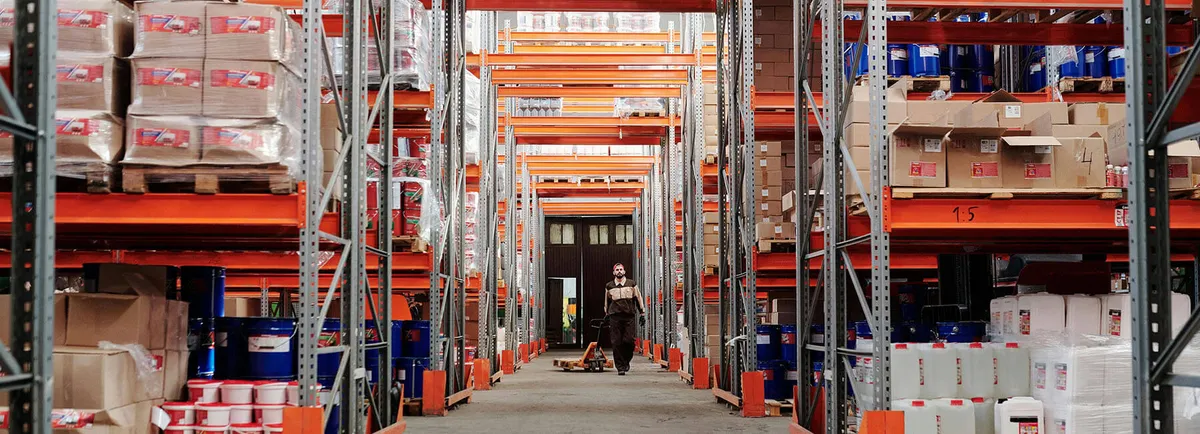
WHERE B2B DISTRIBUTION BREAKS
The failure modes that keep coming back
B2B distribution failures aren't accidents — they're the result of treating routing guide compliance as optional until something breaks.
Short or Incorrect Shipments
A PO is released to pick without confirming physical inventory matches system state. The buyer receives less than ordered and issues a chargeback.
Labeling Failures from Version Drift
The buyer updates the routing guide with a new label format. The old template is still in use. The buyer's receiving system rejects version 2 cartons.
Missing or Late ASN
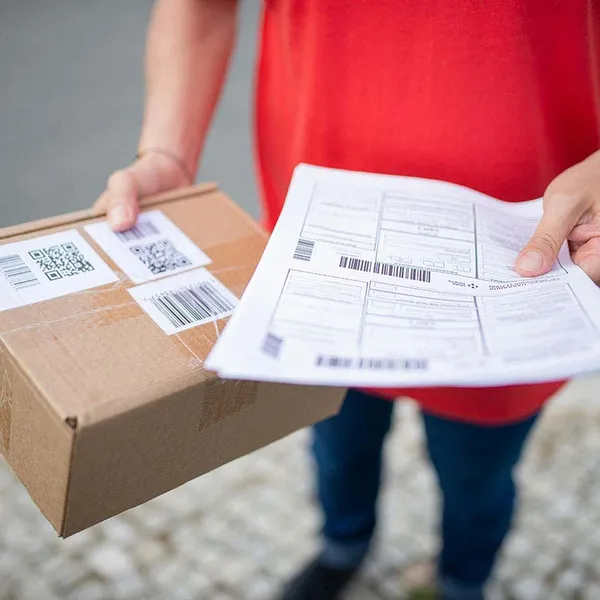
The ASN is generated but held until after the truck departs. The buyer's receiving team has no advance notice. In most routing guides, this is a chargeback trigger.
Missed Delivery Appointments
The shipment is ready, but the appointment slot isn't confirmed until hours before arrival — or is missed entirely. Explicit chargeback consequences follow.
Documentation Gaps at Handoff
The shipment leaves without a complete packing list, proof of carrier receipt, or buyer-specific compliance documents. No evidence trail for disputes.
THE B2B TRADE-OFF
Routing guide requirements are not guidance — they are rules
A routing guide is a compliance document. Failure to meet its requirements triggers financial consequences. It specifies carrier requirements, labeling, pallet configuration, ASN requirements, delivery appointments, packing requirements, document requirements, and a chargeback schedule. The sustainable version treats buyer requirements as fixed operational constraints, not as guidance to be interpreted.
WHAT GOOD LOOKS LIKE
A stable B2B operation runs on explicit rules
The operating model embeds requirements before the first shipment, not during it. When requirements change, the spec changes — not someone's mental model.
- Requirements are embedded, not remembered — carton build rules, label specs, constraints captured in the operating spec
- Purchase orders drive execution, not improvisation — each PO validated against stock before pick begins
- Exceptions are documented, not absorbed — partials, shorts, and substitutions follow a defined escalation path
- Version control protects the operation — routing guide updates applied with version control, old version retired before new goes live

DELIVERY COMPLIANCE
Three non-compliances on one shipment can eliminate your margin
Routing guide chargebacks are not abstract. They have published rates, they compound within a single shipment, and they can eliminate the margin on a delivery entirely. A missing ASN, wrong labels on 10 cartons, and a late arrival can generate chargebacks that represent 8-12% of the invoice value. The prevention is embedding requirements in the operating process so that the compliant output is the default output.
- Missing ASN: commonly 50-250 EUR per shipment, even if physical delivery is correct
- Non-compliant label format: commonly 10-50 EUR per carton, accumulates fast
- Incorrect pallet configuration: commonly 50-200 EUR per pallet
- Late delivery (appointment-based): commonly 2-5% of invoice value plus fixed fee
OPERATING MODEL
B2B distribution as a controlled system
We run a defined operational flow with explicit controls at each step. The practical rule is simple: buyer requirements are embedded in the process, not checked before each shipment.
B2B Fulfillment
Purchase order execution, carton and pallet logic, routing guide adherence, documentation handoffs. Each PO validated against stock before pick begins.
Labeling and Relabeling
Carton labels, GS1 formats, buyer-specific label specs, version control. Old version retired before new version goes live — not mixed into live shipments.
Inventory Control
Stock truth before pick, lot and version segregation, reconciliation. Physical stock matches system state before any pick line is authorized.
Quality Inspection
Inbound verification so defective units don't reach retail buyers. Sampling and AQL when variance justifies inspection.
Cross-Docking
For distribution flows that don't require long-term storage. Components or finished goods move through the facility with controlled handoffs.
YOUR OPERATIONS BASE IN SPAIN
Valencia region — designed for controllable B2B distribution
Short handoffs from port to warehouse reduce handling and delay. We coordinate container moves and local drayage so the inbound leg doesn't become a separate logistics project.
Talk to OperationsREAL SCENARIOS
Stock validation gap causes short-ship chargeback
A PO is released to pick against inventory that doesn't match reality. The warehouse ships 180 units because 20 were in a damaged state not reflected in the system. The buyer ordered 200, receives 180, and issues a short-ship chargeback plus a discrepancy claim. Our fix: stock validation before pick authorization, with physical sample verification for critical orders. Every exception is logged and traced to source.

REAL SCENARIOS
Label version drift triggers compliance failure
The buyer updates the routing guide with a new label format. The old template is still in use. Some shipments are labeled to version 2, some to version 3. The buyer's receiving system rejects or delays version 2 cartons. Our fix: version control on all labeling specs with a hard cutover — old version retired before new version goes live. WIP on old labels is cleared before the switchover.

WHO THIS FITS
When this model is a good fit
This approach is a strong fit when you value compliance and margin protection over fast promises.
- Brands and distributors serving retail buyers with formal routing guides
- Operations where chargebacks are eroding margin on thin-margin products
- Teams managing multiple buyers with different carton, label, and appointment requirements
- Brands entering retail for the first time that need the operating spec before the first shipment
- Operations that need both B2B and ecommerce channels with explicit segregation rules

LIMITS
Where we draw the line
We don't promise what we can't control.
- No cold chain or temperature-controlled logistics
- No ADR classes 1 and 7 (hazardous goods restrictions)
- Not storage-only without an operational model
- If a requirement isn't confirmed in conversation, we treat it as case-by-case and clarify before execution

GET STARTED
Map your B2B flow — we'll identify where compliance is leaking
Share your buyer's routing guide (or describe the requirements if you don't have a formal document yet) and we'll map the operating spec: carton build rules, label requirements, ASN format, appointment logic, documentation package, and exception handling. We do this before the first shipment, not during it.
Map your B2B flowFAQ